The History of Santorini: From Ancient Volcano to Modern Paradise
The Volcanic Origins of Santorini
Before there was history, there was geology. Santorini owes its extraordinary existence entirely to volcanic activity. The island sits above a highly active volcanic hotspot in the Aegean Sea, and its dramatic crescent shape is the direct result of one of the most powerful eruptions in human history.
The Minoan Eruption — Around 1600 BC
Approximately 3,600 years ago, a cataclysmic volcanic eruption caused the centre of what was then a much larger island to collapse into the sea. The resulting explosion. Now known as the Minoan Eruption which was one of the largest volcanic events in recorded human history, estimated to have been four times more powerful than the eruption of Krakatoa in 1883. As a result, the central part of the island sank beneath the waves, creating the vast, deep-water bay known as the caldera. The dramatic crescent of land that remained became the Santorini we know today.
The eruption sent ash and pyroclastic material across the entire eastern Mediterranean. Furthermore, the resulting tsunamis and climate disruption are believed by many historians to have contributed to the decline of the Minoan civilisation on the island of Crete. Some scholars also connect the Minoan Eruption to the ancient legend of Atlantis — the lost civilisation swallowed by the sea. Consequently, Santorini carries with it one of the most enduring mysteries of the ancient world.
The Caldera Today
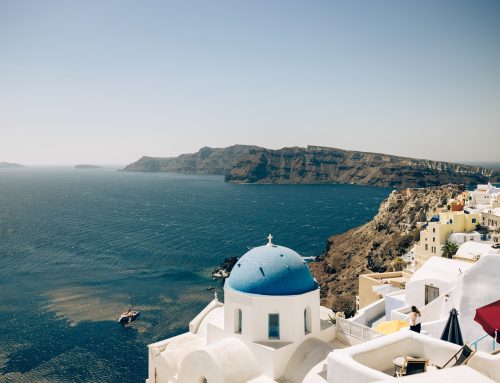

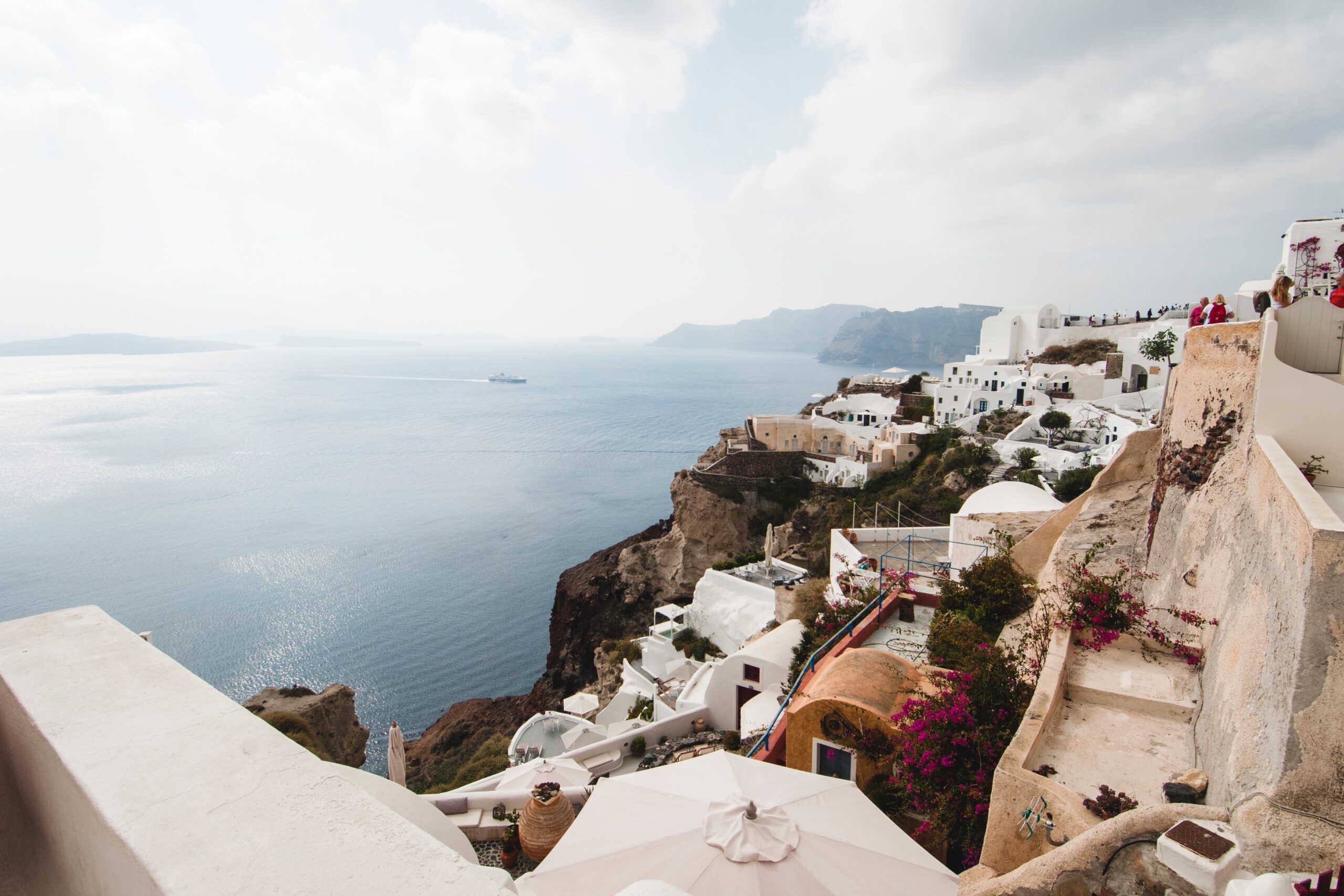
The caldera left by the Minoan Eruption is approximately 12 kilometres wide and up to 400 metres deep. In its centre sit the small volcanic islands of Nea Kameni and Palea Kameni and this is evidence that the volcano beneath remains active. Nea Kameni emerged from the sea as recently as 1707 and is still volcanically active today, with warm sulphurous hot springs bubbling up around its shores. Therefore, when you stand on the rim of Santorini and look out over the caldera, you are looking directly into the crater of a living volcano.
| 💡 See the Volcano Up Close — Santorini Caldera Cruise
Our Santorini sunset cruise takes you out onto the caldera by boat, past the volcanic islands of Nea Kameni and the therapeutic hot springs — giving you an extraordinary perspective on the island’s volcanic origins. [LINK TO TOUR: Santorini Sunset Cruise] |
Prehistoric Santorini — The Minoan City of Akrotiri
Long before the great eruption, Santorini was home to a thriving Bronze Age civilisation. The prehistoric settlement of Akrotiri is located at the southern tip of the island. Akrotiri one of the most advanced urban centres of the ancient Aegean world.
The First Inhabitants
The earliest evidence of human habitation on Santorini dates back to approximately 3000 BC. The first settlers believed to be pre-Hellenic peoples that arrived on the island. Over the following centuries, Santorini developed strong trade and cultural connections with the Minoan civilisation of Crete, becoming a significant hub in the Aegean trading network. Moreover, the island’s fertile volcanic soil supported agriculture, and its position in the southern Cyclades made it a natural stopping point for seafarers.
Akrotiri — The Greek Pompeii
The settlement of Akrotiri was a sophisticated multi-storey town with advanced drainage systems, paved streets and remarkable fresco paintings that survive to this day. When the volcano erupted around 1600 BC, the inhabitants having been warned by prior earthquakes evacuated in time. As a result, no human remains have been found at the site. However, the buildings, streets, furniture and frescoes were preserved in extraordinary detail under metres of volcanic ash.
Excavations began at Akrotiri in 1967 under the archaeologist Spyridon Marinatos and continue to this day. The site has revealed a window into Bronze Age life that is unparalleled in the Aegean world. Additionally, the famous frescoes of Akrotiri depicting detailed scenes of nature, seafaring and daily life. They are considered among the finest artworks of the ancient world and are displayed in the Museum of Prehistoric Thera in Fira.
| 💡 Visit Akrotiri on a Private SantoMax Island Tour
Our private Santorini island road tour includes a visit to the Akrotiri area and combines it with the island’s other great historic and scenic highlights — all with a local expert guide who brings the history to life. [LINK TO TOUR: Santorini Unique Experience Road Tour] |
Ancient Santorini — Phoenicians, Dorians and Ancient Thera
The Phoenicians and the Name Kalliste
After the eruption, the island was eventually resettled. Around 1300 BC, Phoenician settlers — attracted by the island’s strategic position and fertile land — established a new community. According to ancient tradition, it was the Phoenician leader Membliarios who named the island Kalliste, meaning ‘the most beautiful’. The name was fitting then, as it remains today.
The Dorians and the Name Thera
Around the 9th century BC, Dorian Greeks arrived under the leadership of a nobleman named Theras. He gave the island his own name Thera. Remains the island’s official name to this day. Under Dorian rule, the settlement of Ancient Thera was established on the rocky plateau of Mesa Vouno, where extensive ruins can still be visited. The site includes temples, a theatre, an agora and inscriptions dating back over 2,500 years.
The Founding of Cyrene
One of the most remarkable chapters in Santorini’s ancient history is the founding of the North African city of Cyrene. Around 631 BC, a group of settlers from Thera established a new colony on the coast of modern-day Libya. Cyrene grew to become one of the most important cities of the ancient Greek world, famed for its philosophers, scholars and athletes. Furthermore, this act of colonisation demonstrates the seafaring ambition and reach of Santorini’s ancient inhabitants
Byzantine Santorini — The Christian Era
With the spread of Christianity across the Roman Empire, Santorini became part of the Byzantine world. The island was established as a seat of the Christian Church, and a bishop was appointed to the island as early as the 3rd century AD. During this period, numerous churches and chapels were built across the island — many of which still stand today in various states of preservation.
The Chapel of Panagia Episkopi
The most significant Byzantine monument on Santorini is the chapel of Panagia Episkopi in Mesa Gonia, built by the Byzantine Emperor Alexios I Komnenos in the 11th century. It is one of the oldest continuously used Christian churches in the Cyclades and houses a remarkable collection of Byzantine icons. Additionally, the church became a focal point of conflict during the Venetian period, when the Catholic and Orthodox communities competed for its control.
Venetian Santorini — Castles, Dukes and the Latin West
In 1204, the Fourth Crusade resulted in the dismemberment of the Byzantine Empire, and Santorini passed into the hands of Venetian and Frankish rulers. This period — which lasted for over three centuries — left a permanent mark on the island’s architecture, culture and even its cuisine.
The Duchy of the Archipelago
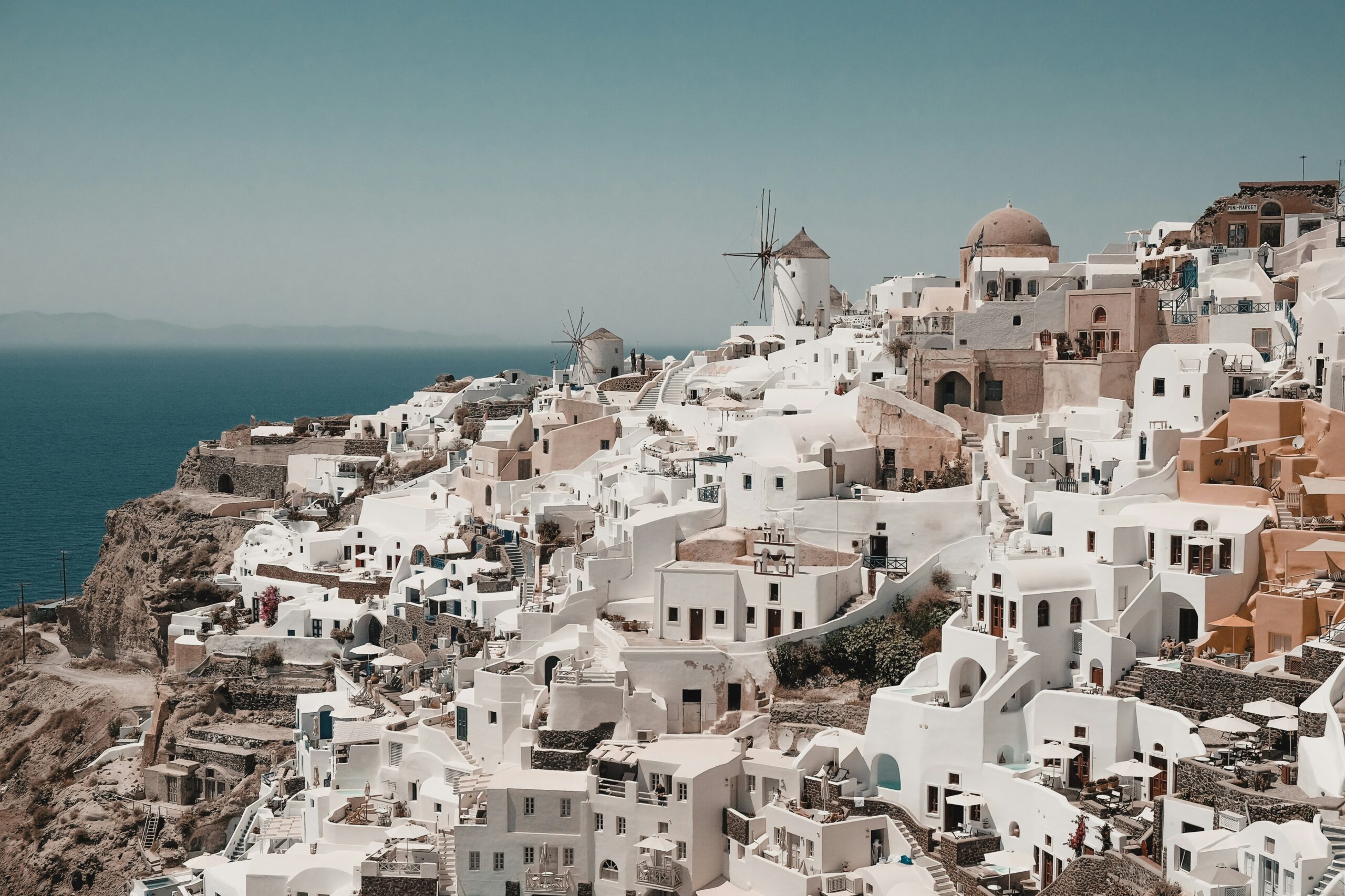
Santorini became part of the Duchy of the Archipelago, a Venetian feudal state centred on the island of Naxos. The island was governed by a succession of Latin dukes who built fortified settlements — known as kastelia — on the highest points of the island to defend against pirate raids. These Venetian-era fortified villages can still be explored today at Pyrgos, Akrotiri, Emporio and Oia.
The Venetian Legacy
The Venetian occupation left a lasting imprint on Santorini’s culture. The island’s Roman Catholic community — a legacy of Venetian rule — still exists today, and the Catholic Cathedral of Saint John the Baptist in Fira stands as a reminder of this period. Furthermore, certain local traditions, architectural details and even some local surnames reflect centuries of Venetian influence.
| 💡 Explore the Venetian Villages on a Private Tour
The Venetian fortified villages of Pyrgos and Akrotiri are among the most historically rich and atmospherically beautiful places on the island. Our private island road tour visits both, with a local guide who brings their stories to life. [LINK TO TOUR: Santorini Unique Experience Road Tour] |
Ottoman Rule and the Rise of Santorini’s Naval Power
In 1579, Santorini came under the control of the Ottoman Empire. However, unlike many other parts of the Greek world, the island enjoyed a relatively peaceful and prosperous period under Ottoman rule. The Ottomans largely left the local Greek and Catholic communities to govern their own affairs, and the island’s inhabitants focused on trade and seafaring.
A Great Maritime Tradition
During the Ottoman period, Santorini developed a powerful merchant fleet. By the late 18th and early 19th centuries, the island’s naval strength had grown considerably. Furthermore, when the Greek War of Independence broke out in 1821, Santorini’s fleet ranked third in the entire Greek maritime world — contributing significantly to the struggle for Greek independence
Modern Santorini — From Earthquake to World-Famous Destination
The 1956 Earthquake
On 9 July 1956, a devastating earthquake of magnitude 7.8 struck Santorini, causing widespread destruction across the island. Many of the traditional cave houses carved into the caldera cliffs were badly damaged or destroyed, and a significant portion of the population emigrated in the years that followed. However, as reconstruction began, the island’s unique architecture was gradually restored — and in many cases improved — setting the stage for the tourism era that would follow.
The Birth of Tourism
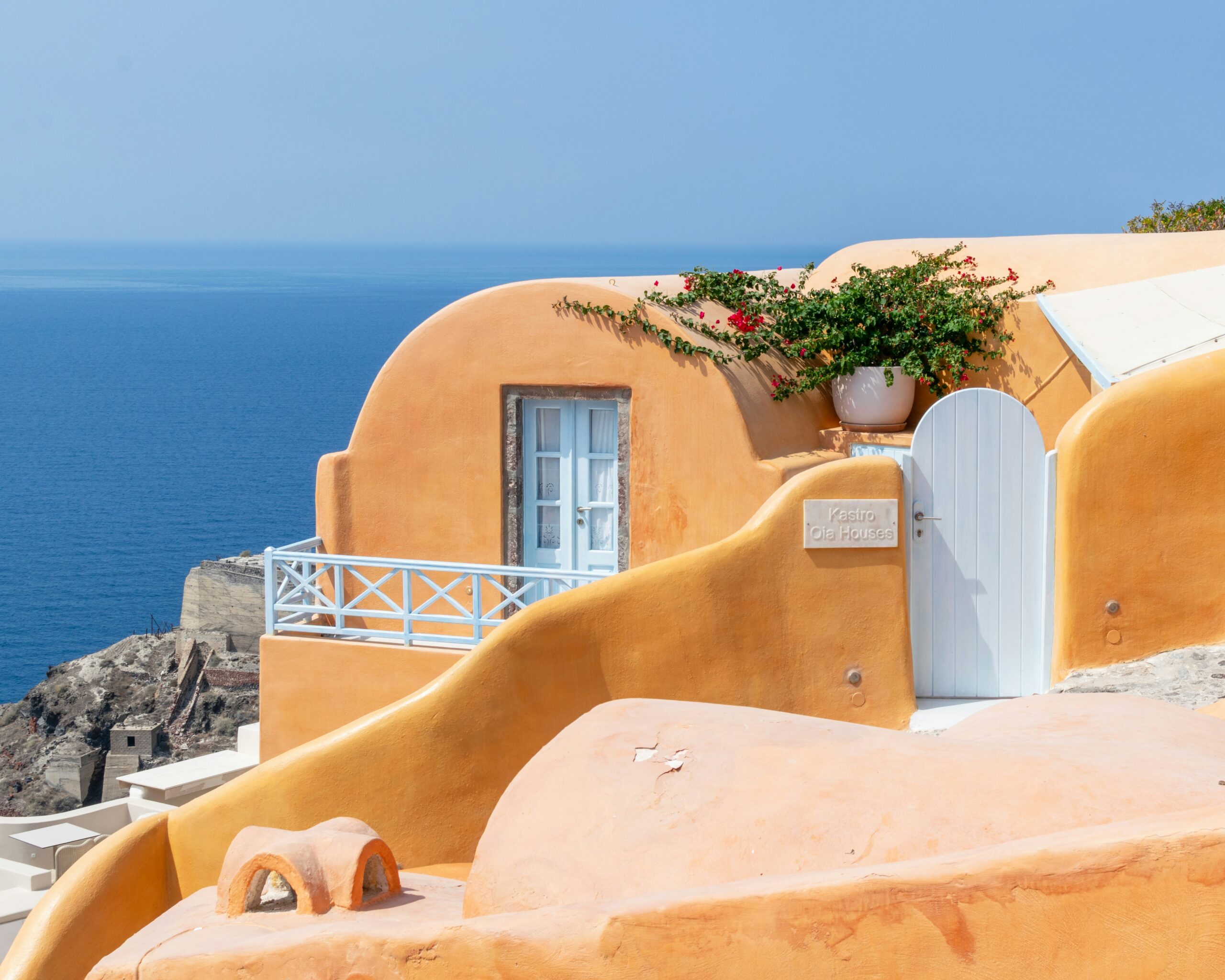
From the 1970s onwards, Santorini began to attract international visitors drawn by its extraordinary landscape and unique character. The restoration of the caldera villages, the development of hotels carved into the volcanic cliff face and the growing reputation of the island’s wines all contributed to its rise as one of the world’s premier travel destinations. Today, Santorini receives over two million visitors per year and is one of the most photographed and recognised islands in the world.
Santorini Wine — An Ancient Tradition Reborn
One of the most remarkable aspects of modern Santorini is the continued cultivation of its ancient vineyards. The Assyrtiko grape — grown on the island for thousands of years using the unique basket-vine technique — has attracted international recognition and critical acclaim. Santorini’s wines are now exported around the world and the island’s wineries welcome visitors for tastings and tours throughout the season. As a result, wine has become one of the island’s defining cultural and economic pillars.
| 💡 Experience Santorini’s Living Wine Tradition
Our guided wine tours visit the island’s finest wineries, where you can taste Assyrtiko and Vinsanto while learning about the ancient techniques that have shaped Santorini’s wine culture for millennia. [LINK TO TOUR: The Art of Wine – A real taste of Santorini] |
❓ Frequently Asked Questions About Santorini’s History
What is Santorini’s ancient name?
Santorini has had several names throughout its history. In ancient times it was called Kalliste (‘the most beautiful’) by Phoenician settlers, then Thera after the Dorian leader Theras who colonised the island around the 9th century BC. The name Santorini derives from the Italian Santa Irini (Saint Irene), given by Venetian sailors during the medieval period. Today the island’s official name remains Thira, while Santorini is universally used in tourism.
What happened to the Minoans on Santorini?
The Minoan inhabitants of Akrotiri are believed to have evacuated successfully before the great eruption of around 1600 BC, as no human remains have been found at the site. Prior earthquakes likely gave them sufficient warning to flee. Nevertheless, the eruption almost certainly contributed to the broader decline of Minoan civilisation across the Aegean.
Is Santorini’s volcano still active?
Yes. The volcano beneath Santorini remains active. The most recent volcanic activity occurred in the 20th century, and the hot springs around the island of Palea Kameni are evidence of ongoing geothermal activity. Scientists monitor the volcano continuously, and while no major eruption is currently forecast, the geological activity makes Santorini one of the most closely watched volcanic systems in Europe.
What is the connection between Santorini and Atlantis?
Many historians and archaeologists have proposed that the Minoan Eruption and the subsequent collapse of the Santorini caldera may have inspired the ancient Greek legend of Atlantis — the advanced civilisation destroyed and swallowed by the sea. However, this theory, while compelling, remains unproven. The connection was first proposed in the 20th century and continues to be debated by scholars
Discover Santorini’s History with SantoMax
Understanding the history of Santorini transforms the way you experience the island. When you stand on the caldera rim and look down at the volcanic islands below, you are not just admiring a beautiful view — you are standing on the edge of one of the most powerful volcanic events in human history. When you walk through Akrotiri, you are stepping into a Bronze Age city that was frozen in time. When you taste a glass of Assyrtiko wine, you are connecting with a viticultural tradition that stretches back over 3,000 years.
At SantoMax, our local guides bring this history to life on every tour. With a perfect 5.0 TripAdvisor rating from over 110 verified reviews, we are one of Santorini’s most trusted local operators. Browse our full range of private tours and experiences at SantoMax.com — and discover the island’s history, geology and culture with the people who know it best.